World Gold Council CEO Says Bitcoin Is Going to Zero
David Tait, CEO of the World Gold Council, says bitcoin will eventually go to zero, calling the view pure instinct rather than analysis. The comments resurfaced widely this week, drawing pushback pointing to bitcoin's roughly $76 billion in ETF assets and a 40% year-to-date gain against gold's 12%.
BY MARISOL VEGA5 MIN READ
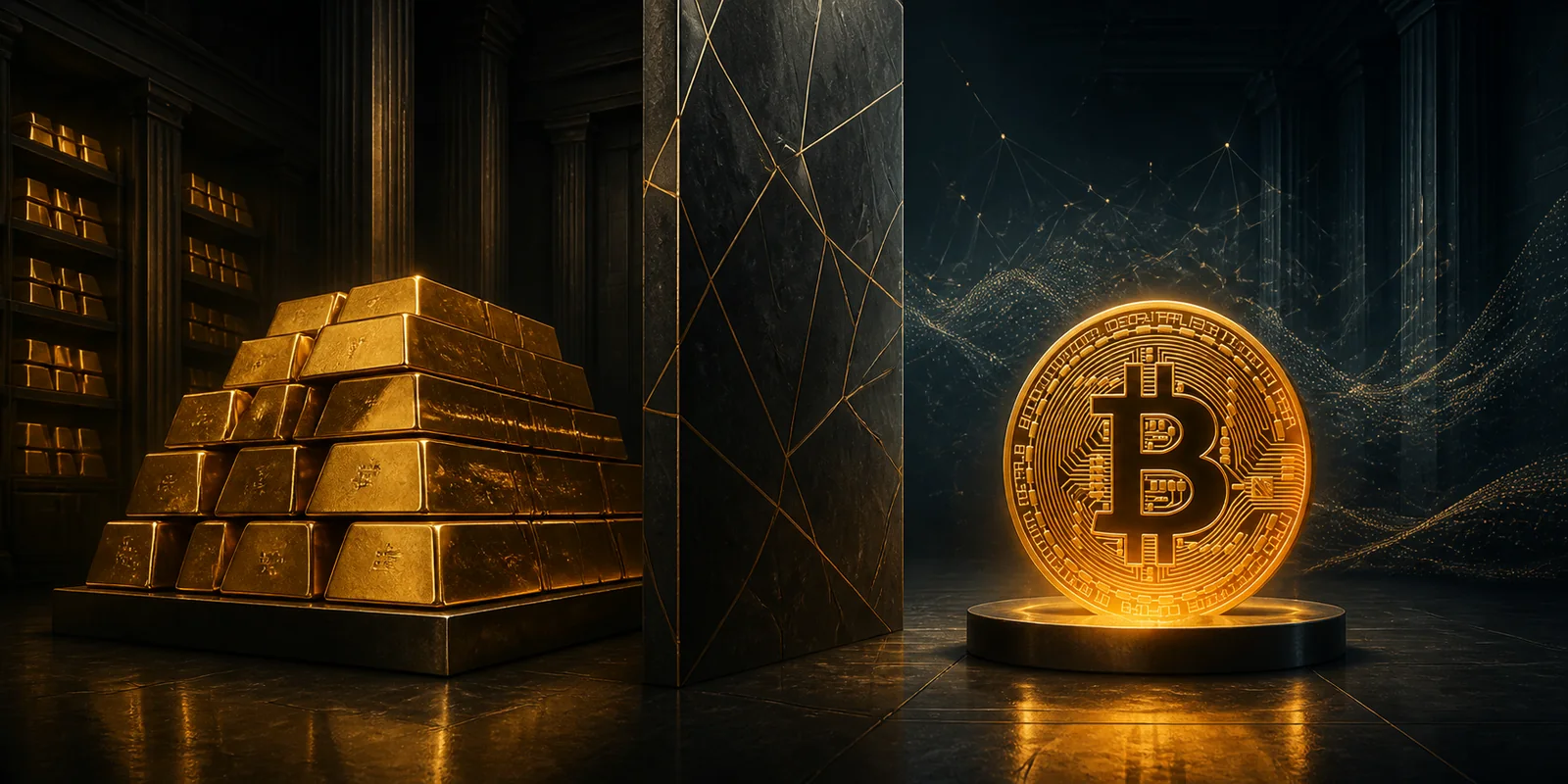
What Tait said
Tait argues bitcoin tracks high-risk assets during periods of market stress instead of offsetting them the way gold does, and that it lacks central bank backing or the broad institutional trust gold has built over centuries. "I thought it was meant to be an offset, something that you could compensate for having exposure to risky assets," he said. "It didn't really do that to that extent."
He said he sees few unique uses for bitcoin beyond stablecoin settlement rails, and that investors who hold either asset should hold both, since gold and bitcoin can offset each other in a portfolio. On the zero call itself, Tait has been candid that there's no model behind it: by his own account it's "just my personal opinion. Just instinct as a trader," with no analytical reasoning attached, and he's said he isn't sure what would change his mind.
The pushback
Reactions to the comments leaned heavily on Tait's institutional role — he runs an organization whose members are gold mining companies with a direct financial interest in gold demand — and on how bitcoin has actually performed. Spot bitcoin ETFs collectively hold an estimated $76 billion in assets, and bitcoin is up roughly 40% year-to-date against gold's 12% gain over the same stretch. Critics also pointed to deepening institutional interest from firms like BlackRock, whose IBIT fund has been one of the fastest-growing ETFs in history by assets gathered.
The exchange is the latest round in a long-running argument over which asset better serves as a safe haven and store of monetary premium — gold's multi-thousand-year track record against bitcoin's steeper but much shorter one, with ETF flow data now giving both sides a running scoreboard to point to.
WHY IT MATTERS
A gold-industry executive predicting bitcoin's collapse isn't new, but the framing — bitcoin as a failed risk-off hedge rather than a bubble or a scam — reflects how the debate has shifted as bitcoin's institutional footprint has grown. Neither a public prediction nor a strong year-to-date return settles the underlying question of whether bitcoin functions as a long-term store of value.
What to watch next
1.Whether bitcoin's correlation with equities during the next risk-off episode looks any different than in past drawdowns.
2.Whether gold or bitcoin ETF flows shift meaningfully in response to the renewed comparison.
3.Whether other traditional-finance and commodities executives weigh in publicly on bitcoin's long-term case.
Frequently asked questions
What did the World Gold Council CEO say about bitcoin?
David Tait, CEO of the World Gold Council, said bitcoin is going to zero, describing the view as pure instinct as a trader rather than an analytical conclusion. He argued bitcoin tracks high-risk assets during crises instead of offsetting them the way gold does.
How much money is in bitcoin ETFs?
Spot bitcoin ETFs collectively hold roughly $76 billion in assets, led by BlackRock's IBIT, which reached tens of billions in assets faster than any gold ETF in history.
Has bitcoin or gold performed better this year?
Bitcoin is up roughly 40% year-to-date, more than triple gold's roughly 12% gain over the same period, though the two assets have moved on different drivers this cycle.
SOURCES & DATA
Education, not financial advice. See our editorial process and corrections policy.
TERMS IN THIS STORY
Marisol Vega
Bitcoin Almanack's editorial byline for Bitcoin markets, spot ETF flows, institutional activity, regulation, and daily news.
Sources, standards & corrections
Sources are linked inline. Read our editorial information, AI disclosure and corrections policy, or report an error.
Sources are linked inline. Read our editorial information, AI disclosure and corrections policy, or report an error.