Coinbase reports Q2 2026 earnings: what to watch
Coinbase reports today, with analysts forecasting revenue below Q2 2025 on quieter trading volume. Transaction fees, subscription revenue, and the regulatory backdrop it's operating under.
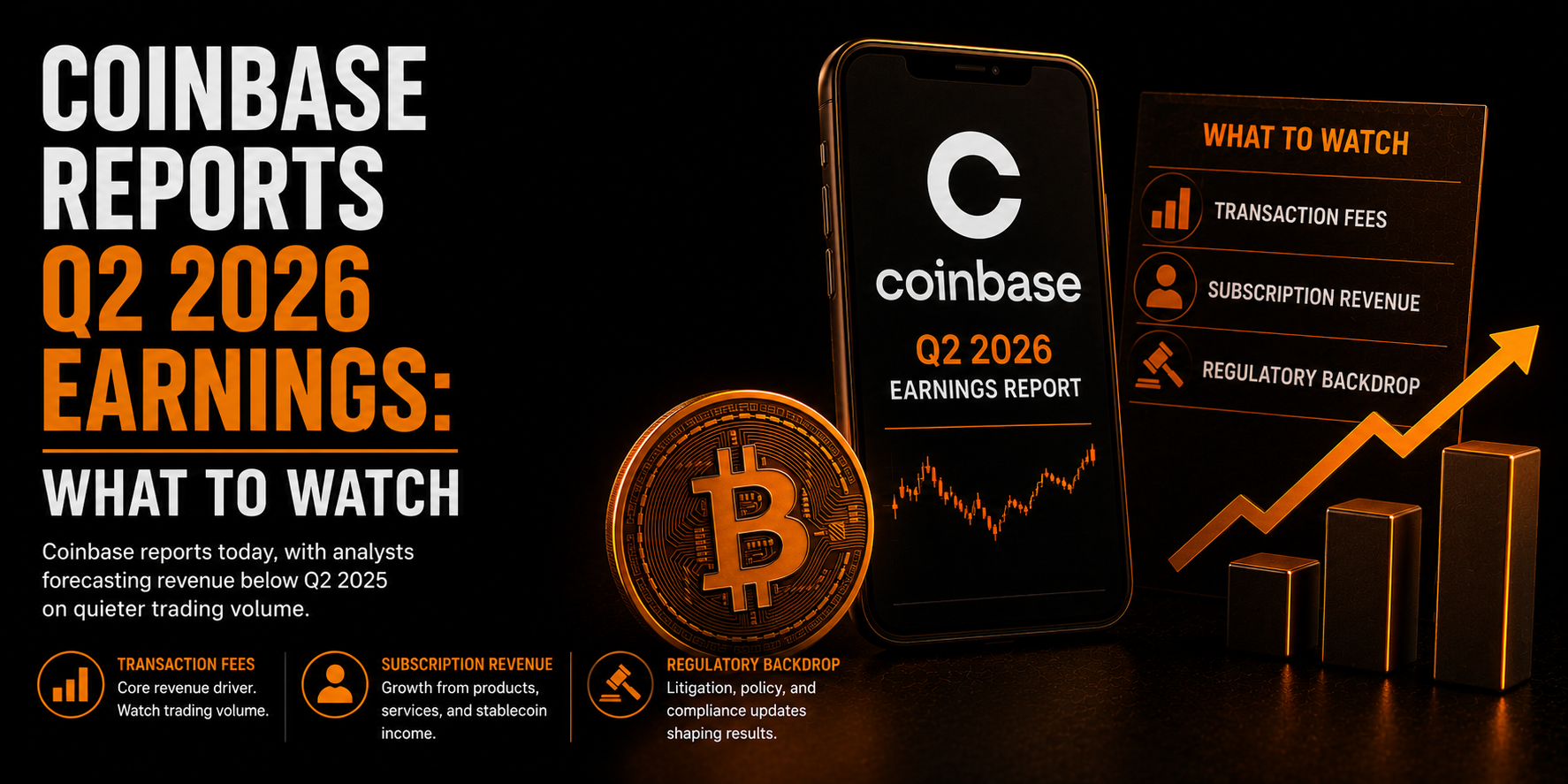
The largest US-listed exchange reports into a quieter quarter for trading volume. Diagram: Bitcoin Almanack.
A quieter quarter, set against a tough comparison
Coinbase's largest revenue line is transaction fees, which move almost directly with trading volume — and Q2 2026 was a notably quieter, more range-bound quarter for crypto markets than the comparable stretch a year earlier. That combination is why analysts are broadly forecasting Coinbase's revenue to land below Q2 2025 rather than above it, despite bitcoin's price sitting in a similar range across both periods. Volume, not price level, is the number that drives this specific line item.
The comparison is tougher than it might look at first glance: Q2 2025 included stretches of unusually high retail and institutional trading activity, so a "decline year over year" headline doesn't necessarily mean the underlying business is deteriorating — it can just as easily mean last year's quarter was the outlier.
The number that matters more than the trading-fee headline
Coinbase has spent several years deliberately building out subscription and services revenue — staking, custody fees, stablecoin-related revenue, and interest income — specifically because that segment doesn't swing with trading volume the way transaction fees do. How much of total revenue that segment represents this quarter, and whether it grew even as transaction revenue fell, is the clearest signal of whether the diversification strategy is actually working under real market conditions rather than in a bull-market quarter where it doesn't need to.
The regulatory backdrop shaping the call
Coinbase reports into a materially different regulatory environment than a few years ago — a friendlier posture from federal regulators, ongoing progress on CLARITY Act-style market-structure legislation, and continued institutional product launches. Expect management commentary to lean into that backdrop regardless of the quarter's trading-volume numbers, framing near-term softness against a longer-term regulatory tailwind.
WHY IT MATTERS
Coinbase is the closest thing crypto markets have to a bellwether for retail and institutional engagement — a soft quarter reported alongside real diversification progress reads very differently from a soft quarter with no offsetting story. Which version shows up in the print says something about the health of the broader trading ecosystem, not just one company's stock.
What to watch next
1.Subscription and services revenue as a share of the total. The clearest read on whether diversification is offsetting the trading-fee slowdown.
2.Guidance language for Q3. Management commentary on trading-volume expectations often moves the stock more than the reported quarter itself.
3.International and institutional user growth. A slower US retail quarter can be offset by growth elsewhere in the business.
Frequently asked questions
When does Coinbase report Q2 2026 earnings?
Coinbase is scheduled to report Q2 2026 results on July 30, 2026, alongside a call for analysts and investors.
Why are analysts expecting Coinbase's revenue to fall?
Coinbase's largest revenue segment is transaction fees, which move directly with trading volume. A quieter, more range-bound crypto market in Q2 2026 means lower volume and lower transaction revenue than the same period in 2025.
What is subscription and services revenue for Coinbase?
It's the revenue Coinbase earns outside of per-trade fees — staking rewards, custody fees, stablecoin-related revenue, and interest income. Coinbase has pushed to grow this segment specifically because it holds up better than transaction revenue when trading volume falls.
SOURCES & DATA
Forward-looking figures ahead of a scheduled earnings release are estimates and analyst forecasts, not confirmed results. Education, not financial advice. See our editorial process and corrections policy.
TERMS IN THIS STORY:
CLARITY Act

Marisol Vega
Markets Reporter covering ETFs, macro, and institutional bitcoin flows.