Bitcoin in a divorce: how courts actually value and split it
Self-custody doesn't make bitcoin invisible in a settlement. What courts actually look at, how they value a volatile asset, and why hiding a wallet is a much worse bet than it used to be.
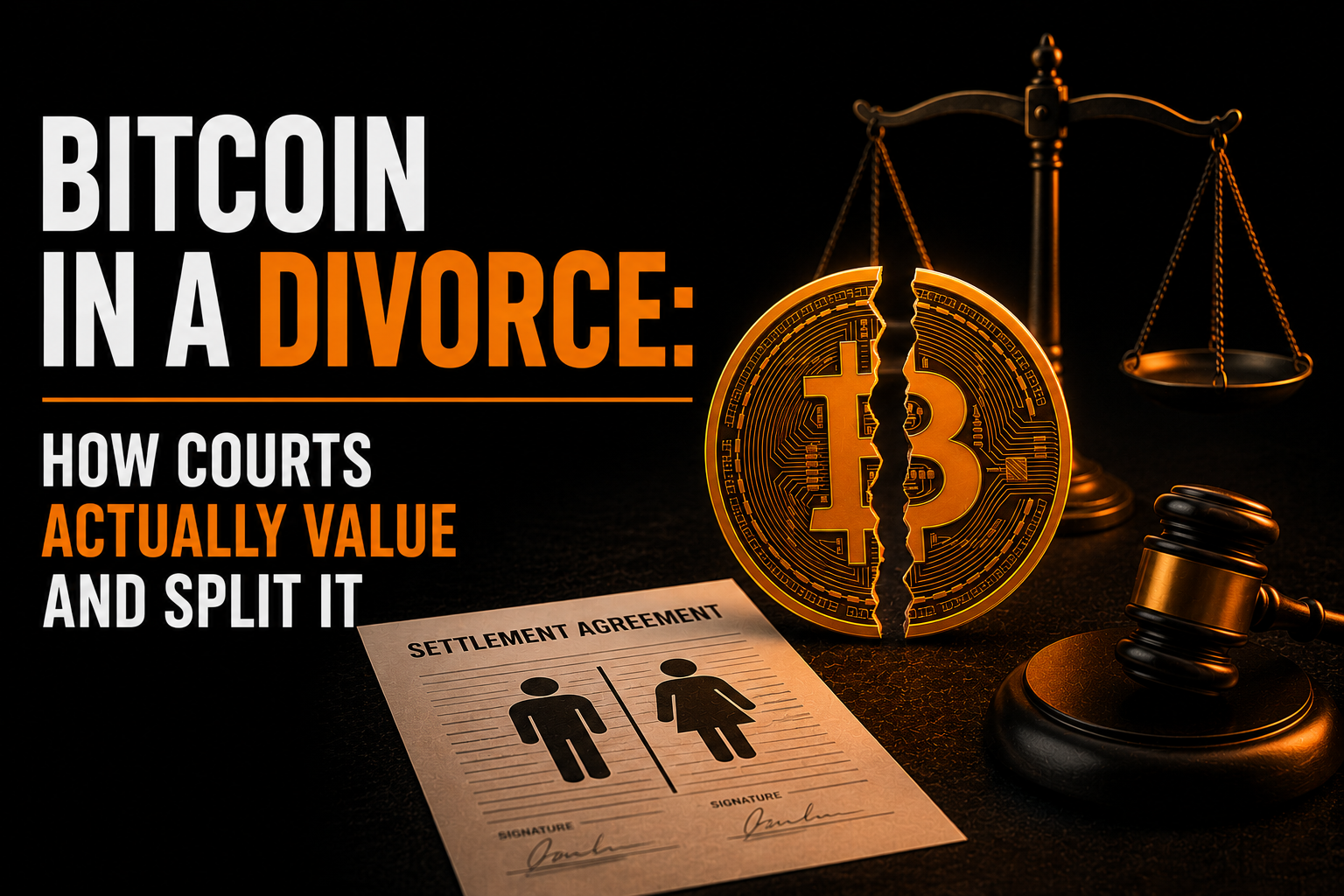
Marital property law didn't anticipate self-custody — courts are catching up fast. Diagram: Bitcoin Almanack.
Self-custody doesn't opt you out of family law
A common misconception is that bitcoin held in a personal wallet, outside any exchange, is somehow shielded from a divorce settlement because there's no bank statement to subpoena. Family courts don't work that way. In nearly every U.S. state, assets acquired during the marriage are marital property subject to equitable distribution or community property division regardless of the account type, the custody arrangement, or whether a spouse's name appears anywhere. The legal test is when and how the asset was acquired, not where the keys live.
What self-custody does change is discoverability, not obligation. Disclosure requirements in divorce proceedings require both parties to list assets under oath; failing to disclose bitcoin holdings — self-custodied or not — is the same legal violation as hiding a bank account, with real consequences if it's later found.
How courts value a volatile asset
Courts have handled volatile marital assets — stock options, restricted equity — for decades, and bitcoin gets folded into the same framework. Typically the court sets or the parties agree to a specific valuation date, and the holding is priced as of that date rather than at the time of filing or the time of final settlement, both of which can be months apart during a period when bitcoin's price might move substantially. Some settlements instead split the actual coins proportionally, avoiding the valuation question entirely by giving each party their share of the asset itself rather than a cash-equivalent buyout.
Volatility cuts both ways in negotiation: a spouse keeping the bitcoin may push for an early valuation date if the price is high and falling, while the other side may push for the opposite. Disputes over which date to use are now a routine feature of divorces involving meaningful bitcoin holdings.
Why hiding a wallet is a worse bet than it used to be
Bitcoin's public ledger is often misunderstood as a hiding place; in practice it's closer to the opposite for anyone who has ever touched a KYC exchange. Forensic accountants and specialized discovery firms now routinely trace on-chain activity, correlating wallet addresses with known exchange deposits and withdrawals — the same techniques used in tax enforcement and fraud litigation. Combined with standard discovery tools (subpoenas to exchanges, forensic review of devices and email), concealment attempts are increasingly likely to surface, and courts have not been lenient when they do: sanctions, unequal reallocation of assets, and reopened settlements have all resulted from bitcoin concealment findings.
What actually protects both parties
The cleanest outcomes come from early, full disclosure and a settlement that addresses the technical reality of self-custody explicitly — not just the dollar value. If bitcoin is being split rather than bought out, the agreement needs to specify exactly how: a new multisig arrangement, a full transfer to a fresh wallet controlled solely by the receiving spouse, or a negotiated buyout at the agreed valuation. Settlements that only specify a dollar figure without addressing the mechanics of the transfer are the ones that tend to generate follow-up disputes.
WHY IT MATTERS
As more households hold meaningful bitcoin, family law is adapting in real time to an asset class that doesn't fit the old assumptions about bank statements and paper trails. Both the disclosure risk and the valuation mechanics are becoming standard parts of divorce practice, not edge cases.
What to watch next
1.Forensic blockchain analysis in family court. Tools built for tax and fraud enforcement are increasingly used in divorce discovery.
2.State-by-state valuation date standards. Some jurisdictions are developing clearer default rules for volatile digital assets.
3.Prenuptial agreements addressing bitcoin explicitly. More couples are specifying custody and valuation terms before marriage, not after.
Frequently asked questions
Is bitcoin considered marital property in a divorce?
In most U.S. states, bitcoin acquired during the marriage is treated as marital property subject to division, the same as any other asset, regardless of which spouse's name is on the wallet or exchange account.
How do courts value bitcoin in a divorce when the price is volatile?
Courts typically use the value as of a specific valuation date set by the court or agreed by both parties, similar to how they'd value volatile stock. Because bitcoin can move sharply, some settlements specify a valuation date close to the actual division to reduce disputes over timing.
Can a spouse hide bitcoin from a divorce settlement?
It's possible to attempt, but increasingly risky: forensic accountants now routinely trace on-chain transactions and exchange KYC records, and discovery obligations require disclosure. Concealing assets discovered later can result in sanctions or a reopened settlement.
SOURCES & DATA
Family law varies significantly by state and jurisdiction. General education, not legal advice — consult a qualified family law attorney for your situation. See our editorial process and corrections policy.

Sam Okafor
Security Reporter covering wallets, self-custody, and the tools that keep bitcoin safe.